




Description
Download Proof | Prompt Hero – Crash Course in AI Art Generation (822.3 MB)
Prompt Hero – Crash Course in AI Art Generation
Introduction: Artificial Intelligence (AI) has revolutionized various industries, and the realm of art creation is no exception. AI Art Generation, a cutting-edge field within AI, involves the use of algorithms and neural networks to produce stunning and often surreal artworks. This crash course aims to provide a comprehensive overview of AI art generation, exploring the underlying technologies, popular tools, and ethical considerations.
Understanding AI Art Generation: At its core, AI art generation leverages the capabilities of neural networks, particularly Generative Adversarial Networks (GANs) and Variational Autoencoders (VAEs). GANs, introduced by Ian Goodfellow in 2014, consist of a generator and a discriminator network that work in tandem to produce realistic images. VAEs, on the other hand, focus on learning the underlying structure of the input data and generate novel content based on this learned representation. These architectures enable AI systems to create diverse and visually captivating artworks.
Popular AI Art Tools: Several user-friendly tools have emerged, making AI art creation accessible to artists and enthusiasts alike. One such tool is DeepDream, developed by Google, which transforms ordinary images into dreamlike, psychedelic compositions. Additionally, RunwayML provides a user-friendly interface for artists to experiment with various pre-trained models, facilitating the generation of unique artworks with minimal coding knowledge. Artists can also explore StyleGAN, a GAN-based architecture that allows for the synthesis of highly realistic and customizable images.
Creating AI Art: To create AI art, one typically begins by selecting a base image or style. This could be an existing artwork, a photograph, or even a random image. The chosen input is then processed by the AI model, generating a unique output that incorporates the stylistic elements of the selected image. Artists can experiment with different parameters and inputs to produce a wide range of artistic results, fostering creativity and pushing the boundaries of traditional artistic expression.
Ethical Considerations: While AI art generation presents exciting opportunities, ethical considerations must be taken into account. Issues such as copyright infringement, ownership of generated artworks, and the potential misuse of AI-generated content raise important questions. Artists, technologists, and policymakers need to collaborate to establish ethical guidelines and regulations that ensure fair use, attribution, and responsible AI art creation.
Challenges and Limitations: Despite the remarkable progress in AI art generation, challenges and limitations persist. AI models may exhibit biases present in their training data, leading to unintended and potentially controversial results. Furthermore, the interpretability of AI-generated art remains a challenge, as understanding the decision-making process of complex neural networks can be elusive. Ongoing research and development efforts aim to address these challenges and enhance the reliability and interpretability of AI-generated artworks.
Future Directions: The future of AI art generation holds immense potential for innovation. Advancements in reinforcement learning, unsupervised learning, and multimodal AI promise to bring about more sophisticated and context-aware artistic creations. Collaborations between artists and AI systems could result in entirely new genres of art that seamlessly blend human creativity with machine intelligence. As the field evolves, interdisciplinary collaboration and open dialogue will be crucial to shaping a future where AI and human creativity coexist harmoniously.
Conclusion: AI art generation is a dynamic and evolving field that continues to push the boundaries of artistic expression. This crash course has provided a glimpse into the underlying technologies, popular tools, ethical considerations, challenges, and future directions of AI art. As AI becomes an integral part of the artistic landscape, embracing its potential while addressing ethical concerns will pave the way for a new era of creativity and collaboration.
View More Courses : Click Here
Become a member at : Click Here








 Ben McAdam How NOT to work for minimum wage in you
  Fashion Model Secrets – The Ultimate Men Style Guide
  Sara Brewer – Overcome Pornography for Good
  Lead gen 2.0 University By Leevi Eerola
  Maria Wendt – The Get Clients Now Business Coaching Program
 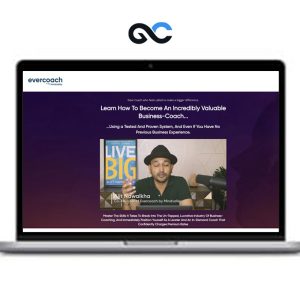 Ajit Nawalkha – Coaching Businesses
  Tom Lulofs – Social Creator Club (Pro)
  Aeromir – The A14 Weekly Option Strategy Workshop
  Nina Clapperton – SEO Roadmap for Travel Bloggers
  Justin Moore – Brand Deal Wizard
  Orgasmic Heart – Orgasmic Touch – Deva Presence
  Ken Stone – Introduction to Spiritual Mastery
  Nina Clapperton – 6 Months to 50k Sessions Masterclass
  Christian The A.i. Guy – Ai Magnate
  Tanner Henkel & Jerrod Harlan – 7-Figure Email Machine
  Jaume Ross – Learn SEO – SEO Mastery (From Beginner to Expert)
  Hypnotica – Mythos of Masculinity
  James Wedmore – How to Address and Overcome Any Objection Masterclass
  Yengub & Brandon Nguyen – eCom Incubator
  Colibri Trader The Ultimate Supply And Demand
  Ben Adkins – Animated Agency Funnel Advanced
  Paul James – 4 Week Automated Income Workshop
  Krista Kathleen – Born To Coach Training Academy
  Paul R. Scheele – PhotoReading Deluxe Course
  Paget Kagy – Unlocking Codes of Abundance
  Rachel Pedersen – Go Gram Grow
 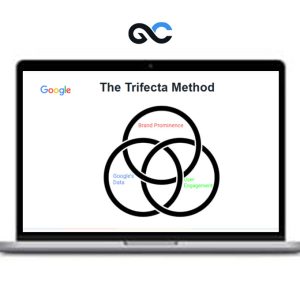 Brock Misner – Ranking Google Business Profiles – The Local Trifecta Method
  Brandon Spears – Pay Per Click Maveric + OTOs
  Barron Cruz – The Mature Mens Dating Program
  Curious Refuge – The World’s First AI Filmmaking Course